
Photographic exploration in Torres del Paine — Torres del Paine
Photographic exploration in Torres del Paine


-
Duration Full day
-
Difficulty Easy
-
Group Size 3
-
Languages English , Spanish
Special group or more than 6 people? Contact us and we'll tailor the trip for you.
From $720.000 / Booking
About This Tour
Photography tour in Torres del Paine, with the itinerary built around the light. Small group, private vehicle and a guide who knows the ground.
The mountains face east
This isn't a preference of ours. It's geography.
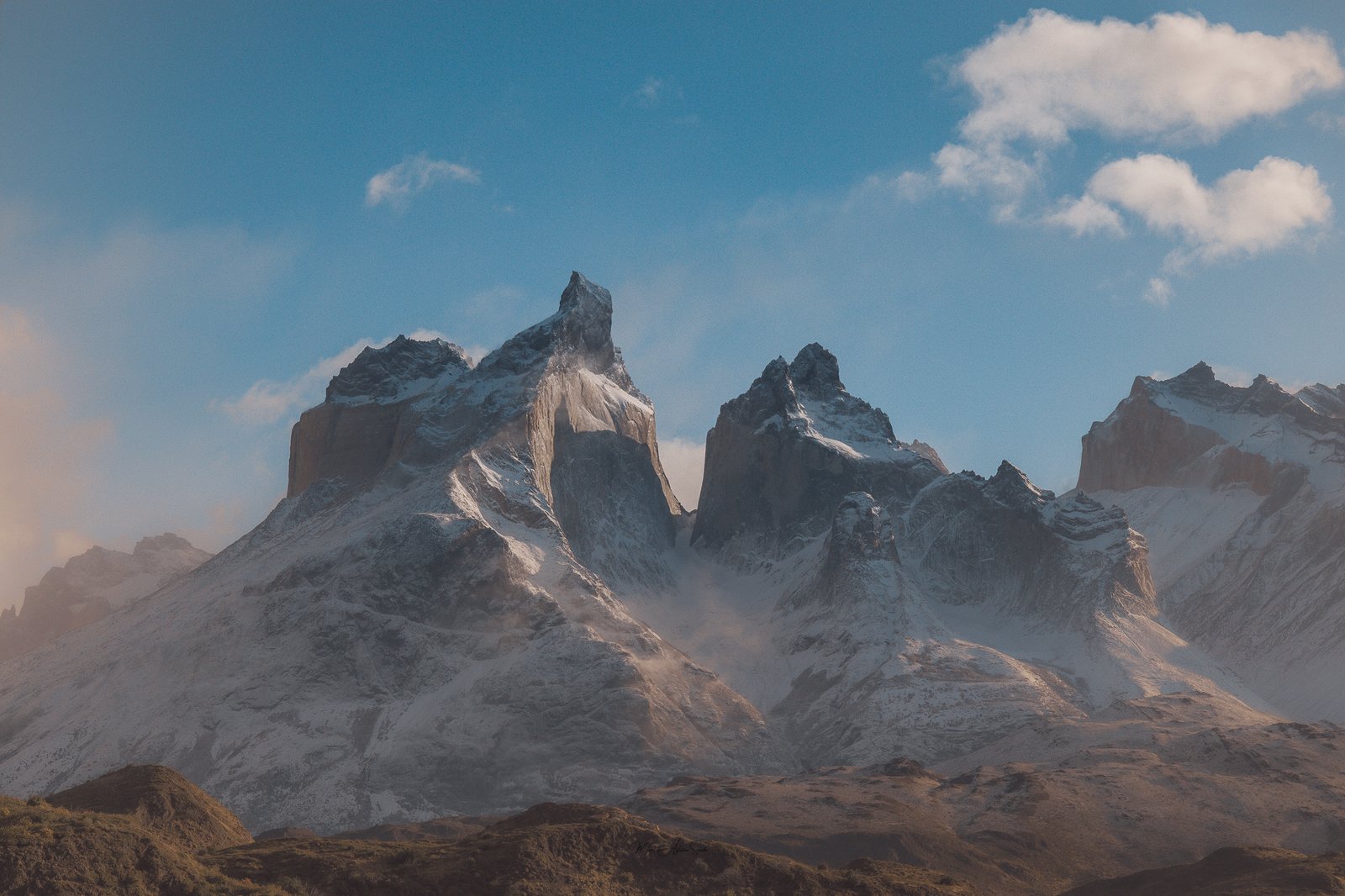
The Torres and the Cuernos face east. At sunrise the light arrives head-on: the granite ignites, the colour is real, and the contrast works for you. By afternoon the sun has passed behind them and they sit backlit — fine for a silhouette, and not much else.
So this is a morning tour rather than a full day that happens to start early. We go at the one hour the mountain lets itself be photographed properly.
The route follows the light, not the road
Most day tours run the park in whatever order suits the driving, and reach the great viewpoints around midday — which happens to be the worst light there is.
We leave Puerto Natales in the dark to be set up before there is anything to photograph. What follows is brief: for a few minutes the granite takes the first light and turns — orange, then pink, then ordinary. If you're on the road when that happens, you've missed the picture you came for.
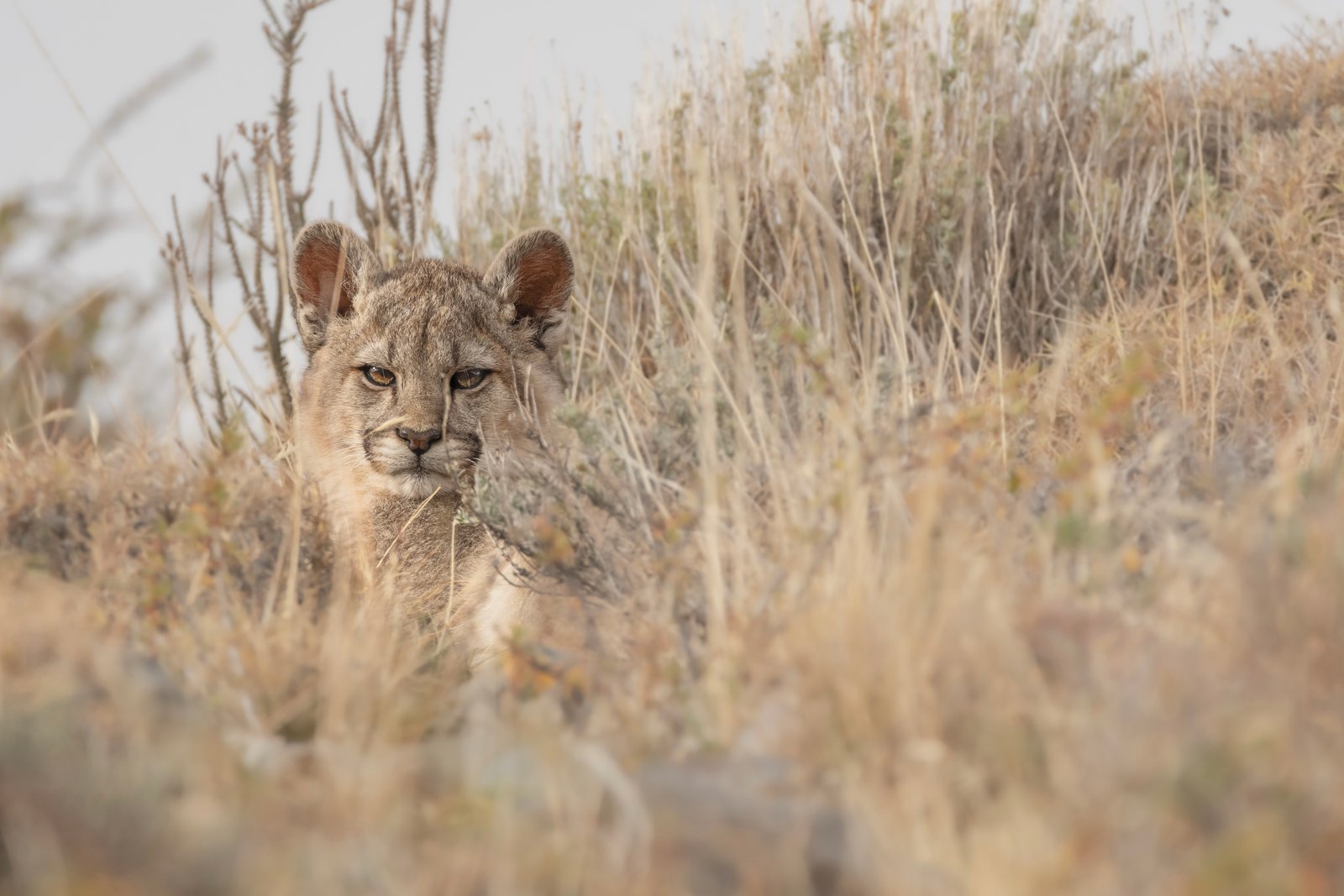
It's the same principle we apply to tracking pumas, simply pointed at the sun: be where it happens, at the hour it happens.
We don't drive the whole circuit, and that's deliberate
The strongest photographic ground here is concentrated in the central and eastern sectors — the Torres at first light, the Cuernos above Nordenskjöld and Pehoé, the pale calcareous shore of Lago Sarmiento, the falls at Salto Grande.
A standard tour drives the full loop because the itinerary says so. That costs hours of road through country that photographs less well, and those hours come out of the one that matters.
So we don't. We stay where the pictures are, and spend what we save standing in the right place, waiting.
After sunrise, a morning used properly
Once the sun climbs, the mountain stops giving and other things start.
Waterfalls where a long exposure prefers shade to sun, lenga forest, the calcareous shoreline of Lago Sarmiento, and the small, textured subjects that flat light actually suits. Bring your ND filters — this is when they earn their place in the bag.
Private, and that's the whole point
The vehicle is yours. No strangers, no shared schedule, nobody waiting in the van while you work a composition.
It matters more here than on any other tour we run. Photography is made of small decisions — one more minute, twenty metres further along the shore, waiting to see whether that cloud clears the ridge. None of those survive a group of twelve with a fixed departure time.
So when the light does something unexpected, we can follow it.
And it's shaped around what you're after
Before we go, tell us what you want to come home with.
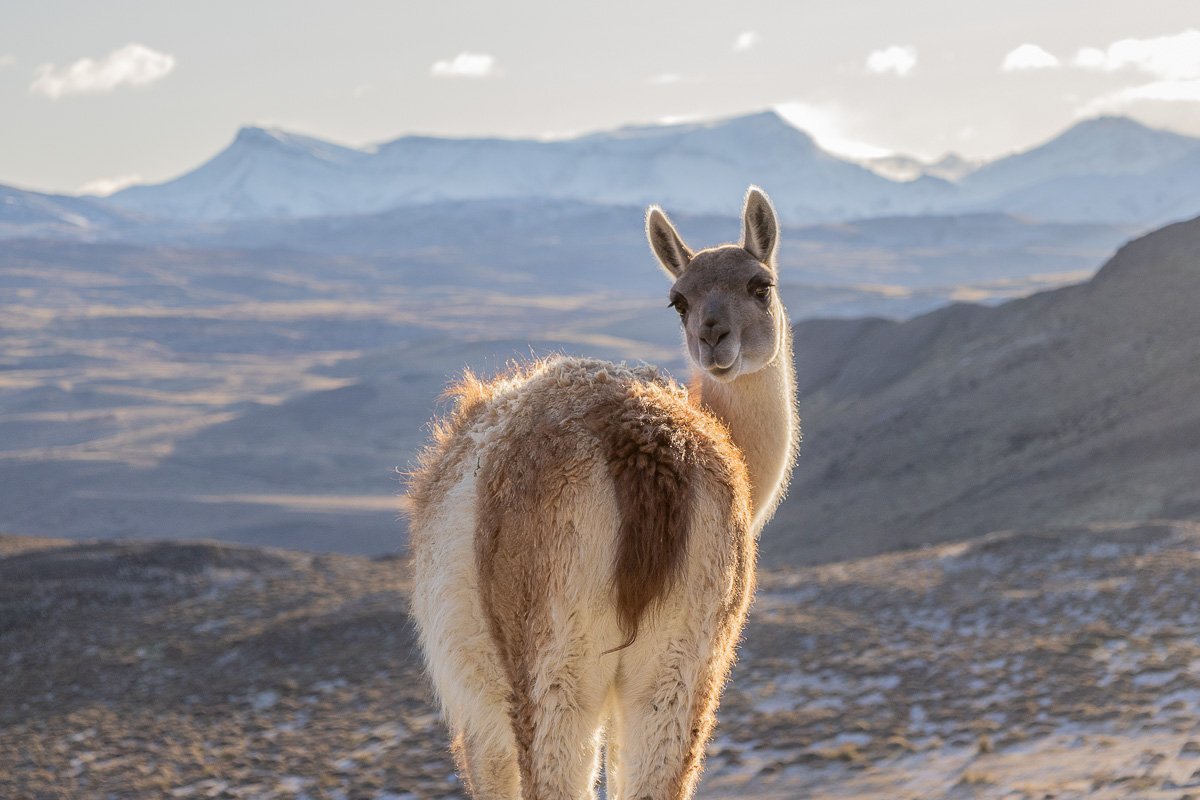
The Torres at dawn, the Cuernos reflected in still water, long exposures at the falls, minimalist shorelines, something with a guanaco in the frame — the plan bends to it. A private vehicle exists precisely so that it can.
If you already have a shot in your head, describe it to us. We'll tell you honestly whether the season and the hour will give it to you, and we'll build the morning around getting you there.
And whatever else appears
This is a landscape day, but the park doesn't know that.
Guanacos on the ridgelines, foxes at dawn, condors riding the thermals. When something crosses our path we stop, because it would be absurd not to. We just won't spend the first light searching for it — for that, our puma tracking day exists.
What we don't do
We don't teach photography. If you want someone reviewing your histogram, this isn't that tour, and we'd rather say so now.
What you get instead is the logistics of a perfect morning handed to you: the right place, at the right hour, without you having driven Patagonia at 4 a.m. to find out where that is.
Winter is the season nobody books, and it shouldn't be
We run this year-round, and if you can choose your dates, consider winter.
This far south the winter sun never climbs high. It rises late, tracks low across the sky and sets early — so the warm, raking light that summer gives you for forty minutes stretches across hours in June and July. Add snow on the granite, a park close to empty, and skies that tend to be more dramatic than kind.
The days are short and cold. They are also, for a landscape photographer, the most generous of the year.
And one practical mercy: in winter, sunrise happens at a civilised hour. No three-in-the-morning starts.
Who this is for
Photographers who already know their camera and want to spend the morning making pictures rather than navigating.
It's eight hours, and the start time is dictated by sunrise on your date — in Patagonia that ranges from a very early summer departure to a far kinder winter one. We confirm it when you book.
There's little walking, but a great deal of getting in and out of the vehicle in cold wind, and a fair amount of waiting for light that may or may not arrive.
If that sounds like your idea of a good morning, it's ours too.
What to bring
· Tripod — not optional at first light
· Wide and telephoto — the Cuernos want both
· ND and polarising filters
· Spare batteries, kept warm; the cold drains them fast
· Layered clothing and a genuine windproof shell
· Headlamp for the pre-dawn setup
Focused on wildlife or condors? See our wildlife safari and condor photography tours. Ready to capture Patagonia? Book your photography tour with Kali Travels.
Included/Exclude
Included
- Transportation
- Bilingual Guide
- snacks
Not included
- Park Ticket (optional)
- Box Lunch (optional)
Cancellation policy
- Up to 7 days before departure: 80% refund.
- Between 6 and 3 days before: 50% refund.
- Less than 72 hours before: no refund.